
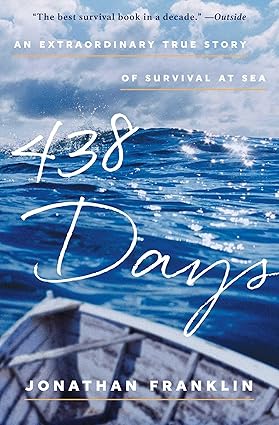
From the very first pages, Jonathan Franklin’s masterful storytelling pulls the reader into a nightmare scenario that seems almost impossible to survive, let alone endure for over a year. The book is meticulously researched, vividly detailed, and emotionally powerful, making it a standout in the true survival story genre.
A Survival Story Beyond Belief
The story begins off the coast of Mexico, where Salvador Alvarenga sets out on what should have been a routine fishing trip. A violent storm changes everything, sending his small boat drifting helplessly across thousands of miles of ocean. What follows is a survival odyssey that tests the limits of the human body and mind.
Not everyone could survive such an ordeal. As readers note, Alvarenga’s deep knowledge of fishing, weather patterns, the moon, and the sea itself played a critical role in his survival. His ability to catch raw fish, birds, and even sea turtles — and to consume them under extreme conditions — is something most people simply could not stomach. Drinking rainwater, turtle blood, and at times even his own urine, while enduring relentless tropical sun and constant danger from sharks, paints a stark picture of survival stripped to its rawest form.
Physical Deprivation and Psychological Trauma
One of the most compelling aspects of 438 Days is its unflinching portrayal of physical deprivation and mental stress. Franklin does not sensationalize the suffering but presents it honestly, allowing readers to fully grasp the toll of hunger, thirst, isolation, and exposure.
Equally heartbreaking is the emotional trauma Salvador endures after losing his young assistant — a companion who becomes a close friend — during the voyage. This loss adds an additional layer of grief, guilt, and loneliness that would have broken many people. Yet, as readers observe, Salvador Alvarenga’s tremendous will to live carries him forward even in the darkest moments.

Skillful Storytelling and Deep Research
Jonathan Franklin deserves immense credit for transforming this unbelievable experience into a credible, compelling, full-length book. As an investigative journalist and skilled writer, Franklin carefully builds the narrative with timelines, maps, and photographs that enhance the reader’s understanding and immersion.
The book also addresses controversies surrounding Alvarenga’s identity, name changes, and lack of documentation — factors that initially caused some to doubt his story. Franklin examines these issues thoughtfully, providing cultural, psychological, and historical context that strengthens the book’s credibility.
By exploring Salvador’s upbringing, personality, hunting skills, eating habits, and physical stamina, Franklin convincingly explains how such survival was possible. Scientific insights and expert commentary are seamlessly woven into the narrative, grounding the extraordinary story in reality.
Life After Survival
Unlike many survival books that end with rescue, 438 Days continues beyond landfall. Readers appreciated learning about Salvador Alvarenga’s difficult journey after reaching shore, including his struggle to reintegrate into society and cope with fame, skepticism, and lingering trauma.
The kindness of the couple who first discovered and cared for him after his arrival is especially moving. These quieter, human moments balance the intensity of the survival story, reminding readers that compassion can be as life-saving as physical endurance.
A Story That Transcends the Genre
What sets 438 Days apart from other books about being lost at sea is its deeper message. As one reviewer noted, this is not just a survival story — it is wisdom about living well. Salvador Alvarenga’s optimism, adaptability, and creativity in the face of overwhelming odds reveal something profound about the human spirit.
Scenes such as his encounter with a whale shark remain etched in readers’ memories long after the book ends. The narrative flows chronologically, maintaining tension while allowing readers to reflect on both the external dangers and the internal psychological battle of survival.
Final Verdict
“438 Days” by Jonathan Franklin is an extraordinary, hard-to-put-down true survival story that commands respect for both its subject and its author. It is well written, deeply researched, emotionally resonant, and relentlessly engaging. The book avoids unnecessary filler and focuses instead on meaningful details that bring Salvador Alvarenga’s ordeal vividly to life.
This book is highly recommended for readers who enjoy:
True survival stories
Books about being lost at sea
Inspirational real-life adventures
Stories of human endurance and resilience
Ultimately, 438 Days leaves readers with awe, humility, and admiration — not only for a fisherman who survived the unimaginable, but for the fragile yet powerful nature of human life itself.
A remarkable story. A remarkable man. A remarkable book.
About the author

As an investigative journalist and non-fiction writer, I seek to capture the spirit of extreme survival. After more than a decade covering South American narco wars and organized crime heists, I realized I was risking my life for no good cause and switched careers. Now, I chronicle the everyday heroism of extreme survival.
My books include A WILD IDEA, a rollicking, inspirational biography of environmental activist Douglas Tompkins who fought for the survival of forests never logged, rivers never dammed and animals never fenced in. Working for nearly 25 years Tompkins singlehandedly launched a campaign to create a half dozen national parks in South America. I call him the greatest conservationist you've never heard of.
(This post may contain affiliate links. As an Amazon Associate, I earn from qualifying purchases. This does not affect your price.)
Comments
Post a Comment